
Exploring the Cold Rolling Process: How Steel Becomes Stronger
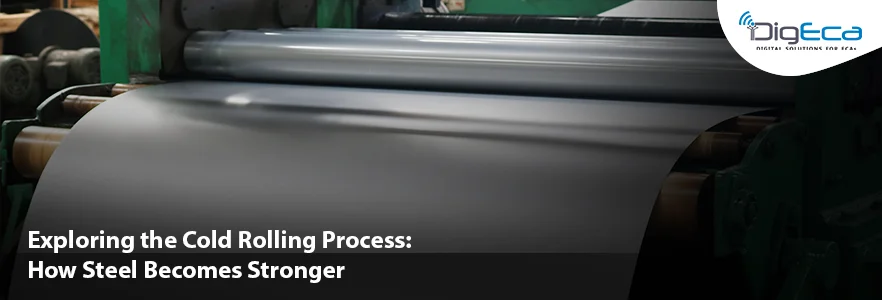
Exploring the Cold Rolling Process: How Steel Becomes Stronger
Steel is one of the most used materials in industries like construction and automotive, among others. Among its various forms, cold rolled steel is particularly valued for its enhanced strength, smooth finish, and precise dimensions. But what makes it so unique? The answer lies in the cold rolling process, a sophisticated method that transforms raw steel into high-performance materials like cold rolled steel sheet, cold rolled coils, and more.
In this blog, we’ll explore how the cold rolling process works, its advantages, and why cold rolled material is preferred for many critical applications.
What is Cold Rolling?
Cold rolling is a metalworking process where steel is compressed and shaped at room temperature after it has already been hot rolled. Unlike hot rolling, which involves high temperatures, the cold rolling process operates at or near room temperature, ensuring more precise control over the material’s properties.
This method produces steel with better surface quality, tighter tolerances, and enhanced strength, making cold rolled steel sheet metal ideal for applications requiring high precision and durability.
The Cold Rolling Process: Step-by-Step
The cold rolling process is a carefully designed procedure involving several stages:
1. Preparation of Raw Material:
The process starts with hot rolled steel that has to be pickled in order to remove any oxide layer (scale) from the surface. This ensures that the resulting cold rolled material is free from impurities.
2. Cold Reduction:
In this stage, the cleaned steel is pressed under high pressure through a number of rollers that are used. These rollers compress the steel, reducing its thickness to precise measurements while improving its mechanical properties, such as its cold rolled steel yield strength.
3. Annealing:
Reduced steel is then heated at a controlled atmosphere to a temperature below its critical range, and some internal stresses are relieved, making it flexible; it is known as annealing. It is important to obtain the right proportion concerning strength and flexibility for the calculated muscle group.
4. Tempering
Finally, the steel undergoes tempering, a process that enhances its surface finish and further refines its mechanical properties. This step ensures the final cold rolled sheet or cold rolled coil is ready for end-use applications.
Why Choose Cold Rolled Steel?
Cold rolled steel has its benefits over other types of steel and these are as follows. Here’s why it’s a popular choice:
1. Enhanced Strength:
Cold rolling mill enhances the yield strength and tensile strength of the steel and restricts the tendency of steel to deform easily. This makes the cold rolled steel sheets to be very appropriate for constructions and applications where weight is a critical factor.
2. Improved Surface Finish:
Being easier to work with and having a smooth and shiny surface, cold rolled material is perfect for cosmetic use, such as use in appliances, automobiles, and furniture.
3. Precision and Accuracy:
Thus, cold rolling has a better dimensional controlling ability than hot rolling. This means cold rolled steel sheet metal has uniform thickness, width, and flatness and conforms to certain standards.
4. Versatility:
Starting with the use of cold rolled coils in the manufacturing processes and continuing with the use of cold rolled sheets in construction, this material can meet different requirements.
5. Cost-Effectiveness:
Cold rolled steel costs more during the initial stages of processing when compared to hot rolled steel, but because of its greater hardness and smoothness, it considerably reduces the cost during fabrication as well as usage.
Uses of Cold Rolled Steel
Cold rolled steel is very popular in most sectors because of its qualities. Here are some common applications:
1. Automotive Industry:
Due to the high yield strength, cold rolled steel is chiefly used for car body panels, structural parts, and chassis components.
2. Construction:
In construction, cold-rolled steel sheet metal is used for roofing, cladding, and structures since it is strong and well-detailed.
3. Appliances:
Cold rolled steel is applied in home-use commodities such as refrigerators, washing machines, and ovens due to its smoothly rolled surface and its ease of being shaped.
4. Furniture
This product attracts buyers who seek to obtain a highly polished appearance and, at the same time, the durability of the cold rolled sheets for use in modern furniture designs.
5. Electronics
Its precision and conductivity make cold rolled steel suitable for electronic enclosures and components.
Cold Rolled Coil vs. Cold Rolled Sheet
While both cold rolled coil and cold rolled sheet are products of the cold rolling process, they serve different purposes.
|
Cold Rolled Coil: |
Cold Rolled Sheet: |
|
Coils are long sheets of steel wound into rolls. They are often used in manufacturing processes where the steel will be cut or shaped further. |
Sheets are flat pieces of steel cut to specific sizes. They are ready to use in applications like roofing, automotive panels, and machinery parts. |
Material Testing and Quality Assurance
To ensure the performance of cold rolled material, rigorous quality checks are essential. Testing methods like tensile strength testing, surface inspection, and thickness measurement guarantee that the steel meets industry standards and customer requirements.
Cold rolled steel is subject to strict material specifications to ensure its reliability and performance in critical applications.
The Future of Cold Rolling with DigECA Tata Steel
The demand for cold rolled steel continues to grow as industries seek materials with superior strength, precision, and sustainability. Advances in technology, such as automation and AI-driven process optimization, are making the cold rolling process more efficient and cost-effective.
Sustainable practices, such as recycling and energy-efficient production methods, are also becoming a priority in cold rolled steel manufacturing, ensuring the industry’s growth aligns with environmental goals.
Conclusion
The cold rolling process is a transformative method that enhances the strength, precision, and versatility of steel. By producing high-quality cold rolled steel sheets, cold rolled coil, and other forms, this process meets the demands of modern industries while maintaining efficiency and sustainability.
For industries looking to push boundaries with modern steel solutions, DigECA Tata Steel offers unparalleled expertise and innovation. With a commitment to excellence and advanced technology, DigECA delivers superior cold rolled material tailored to meet the specific needs of your projects. Choose DigECA to elevate your operations with precision-engineered steel solutions.