
Galvanized Steel for Bus Body Fabrication: Grade Selection, Thickness, and Corrosion Protection
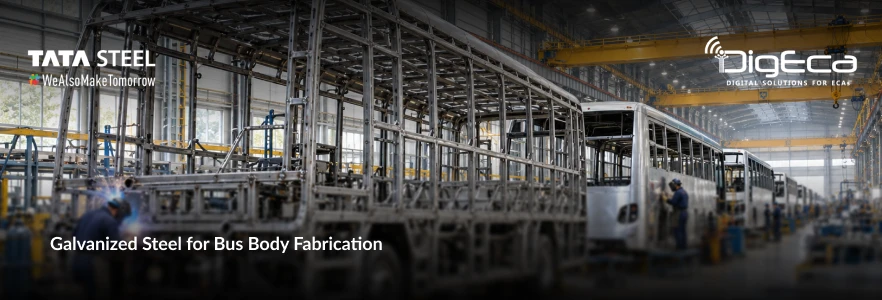
Galvanized Steel for Bus Body Fabrication: Grade Selection, Thickness, and Corrosion Protection
A bus body contains large exterior panels, formed corners, doors, partitions, covers and underbody components. Each part places a different demand on the steel.
A side panel must remain flat across a wide surface. A wheel-arch component must withstand forming. Parts exposed to rain, road spray and mud require suitable corrosion protection. Using one general GP sheet specification for every component can lead to difficult fabrication, unnecessary weight or inconsistent finish.
For an MSME fabricator, selecting galvanized steel for bus body applications comes down to three connected decisions: grade, thickness and zinc coating.
Start with the part being made
The component and its manufacturing process should guide the material specification. Galvanised steel can be used for:
- Side and roof panels
- Interior partitions
- Luggage-compartment panels
- Door skins and access covers
- Wheel-arch components
- Floor and underbody covers
- Formed channels and brackets
- Equipment enclosures
A flat interior cover does not require the same forming performance as a curved exterior section. Visible panels also bring tighter expectations for flatness and painted appearance.
When selecting galvanized steel for bus body fabrication, define where the part will be installed, how it will be shaped and what conditions it will face in service.
Match DQ grade to the forming requirement
Steel grade affects how the sheet responds to bending, pressing and drawing. A grade with insufficient formability can crack or spring back during production. A higher-formability grade can add cost without improving a simple component.
For bus-body applications, we offer Galvano DQ on DigECA. Drawing Quality steel is suited to components that require bending and moderate forming. Its mechanical properties support the fabrication demands of many bus-body parts.
Before selecting from the available galvanized steel grades, check:
- Number and direction of bends
- Minimum bend radius
- Depth of the formed section
- Presence of corners, ribs or flanges
- Punching and welding requirements
- Surface appearance after forming
If your drawing calls for another grade or involves a more demanding shape, share the component geometry and fabrication process with our team when raising your enquiry. A fabrication trial can also confirm how the material performs with the available tooling.
Let the component determine the thickness
There is no single galvanized steel thickness for an entire bus body. The right choice depends on the function, size and support provided to each part.
A sheet that is too thin can distort during handling, welding or service. An unnecessarily thick sheet adds material cost, vehicle weight and forming effort.
Consider:
- Structural and load requirements
- Size of the unsupported surface
- Frame spacing and panel stiffening
- Forming severity
- Welding method
- Vibration during operation
- Vehicle weight targets
- Customer specifications
Large exterior panels require enough stiffness to control waviness and vibration. Smaller covers and interior partitions can have different requirements. Brackets and load-bearing parts must be checked against the design loads they will carry.
On DigECA, you can enquire for Galvano DQ in various thicknesses for bus-body applications, subject to the selected dimensions and availability. The drawing, design calculations and fabrication trials must guide the final choice of galvanized steel sheet for bus body production.
How galvanized steel corrosion protection works
Bus bodies operate through rain, humidity, road spray and polluted environments. Moisture can also collect around joints, wheel arches, floor sections and poorly drained cavities.
The zinc coating protects the underlying steel from direct exposure to these conditions. The required coating mass depends on the location of the component, its operating environment and its expected service life.
A dry interior panel does not face the same exposure as an underbody cover or wheel-arch component. Before ordering, confirm:
- Whether the component is internal or external
- Exposure to rain, spray, mud or condensation
- Coastal or high-humidity operating conditions
- Painting and pretreatment requirements
- Expected service life
- Customer or project standards
Base-sheet thickness and coating mass are separate specifications. A thicker sheet does not automatically provide better galvanized steel corrosion protection. The zinc coating, fabrication process, paint system and component design all affect long-term performance.
Protect the coating during fabrication
Cutting, punching, welding and grinding can affect the zinc coating. Welded zones require particular attention because heat can damage the coating around the joint. Cut edges, drilled holes and ground areas may also require treatment under the approved fabrication and painting process.
Fabricators should:
- Avoid unnecessary grinding of coated surfaces
- Clean oil, dust and residue before painting
- Treat welds and damaged coating areas as specified
- Prevent water traps in the component design
- Keep drainage paths clear
- Store sheets in a clean, dry and covered area
Material selection alone cannot prevent corrosion if fabrication leaves exposed areas untreated or the component allows water to remain trapped.
Surface quality affects the finished bus
Large painted panels make waviness and surface variation easier to notice. Flatness also affects panel alignment, door fit and assembly.
Galvano is a zero-spangle galvanised plain steel range. Its smooth surface, uniform zinc coating and controlled flatness provide a consistent base for visible and painted bus-body parts.
Paint performance still depends on cleaning, pretreatment, coating chemistry and curing. The galvanized steel sheet and the finishing process must be specified as parts of the same production system.
Define the requirement before requesting a quotation
Sheets can work well for varied panel sizes, smaller batches and facilities without coil-processing equipment. Coils can support continuous production where decoiling, levelling and blanking facilities are available.
Whichever form you choose, share the following details when raising an enquiry:
- Bus-body component and end use
- Required grade and dimensions
- Sheet, slit-coil or full-coil requirement
- Zinc coating mass
- Forming and welding process
- Surface treatment and painting process
- Quantity and delivery location
To buy galvanized coated steel MSME online, first register on DigECA. Select the relevant Galvano product and raise an enquiry for a quotation based on your requirement.
Frequently asked questions
Which galvanised steel grade is suitable for bus-body fabrication?
DQ is suited to many bus-body components that require bending and moderate forming. Confirm the grade against the component geometry, bend radius and fabrication process.
What thickness of galvanised steel should be used for a bus body?
There is no single thickness for every part. Component size, load, support, forming requirement and vehicle weight targets must guide the decision.
Does a thicker galvanised sheet provide better corrosion protection?
Not necessarily. Base-sheet thickness and zinc coating mass are separate specifications. Exposure conditions, fabrication quality, painting and maintenance also influence corrosion performance.
Can Galvano be painted after fabrication?
Yes. Its zero-spangle surface provides a consistent base for painted panels. Proper cleaning, pretreatment and curing remain necessary for a reliable finish.
What information should I share when requesting a quotation?
Share the component, grade, dimensions, coating mass, material form, quantity and delivery location. Include the forming, welding and painting processes so our team can assess the requirement accurately.
Conclusion
Grade determines how the steel responds during forming. Thickness affects stiffness, weight and fabrication. Zinc coating supports corrosion resistance under the expected service conditions.
Define all three around the bus-body component rather than ordering a generic GP sheet. A clear specification can improve forming consistency, panel fit and corrosion protection while controlling material use.