
The Manufacturing Process of Hot Rolled Steel: Step-by-Step Guide
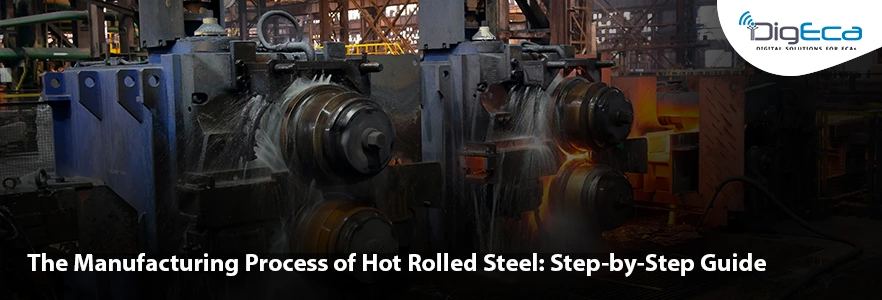
The Manufacturing Process of Hot Rolled Steel: Step-by-Step Guide
The hot rolled steel is the foundation of contemporary infrastructure and industrial uses. It develops strong and high strength infrastructure from construction to the automotive industry. The understanding of the manufacturing of hot rolled steel explains its flexibility, strength and versatility. This guide, in detail explains, how India’s best hot rolled steel providers manufacture top quality steel that provides maximum industry performance.
What is Hot Rolled Steel?
Hot rolled steel is the steel that is treated at high temperature (above 1,100°C or 2,000°F) such that they become more ductile and malleable. The process enhances its mechanical strengths like enhancing on its ductility and toughness. Unlike cold- rolled steel where further processing is carried out at room temperature, hot- rolled steel possesses rough surface finish. Nevertheless, it is quite affordable and used only in bulk industrial applications, as opposed to the cold-rolled steel.
Key Characteristics of Hot Rolled Steel:
• Increased malleability due to over-heat treatment.
• Coarse, scaly surface (a product of the cooling process).
• Less precise sizes compared to cold-rolled steel.
• Best suited for structural components, automobile frames, and heavy machinery.
Step-by-Step Hot Rolled Steel Manufacturing Process
1. Raw Material Selection
Hot rolled steel manufacturing process begins with the purchase of quality raw materials. Steel slabs or billets, composed of iron ore, coal, and scrap steel as the main constituents, are chosen based on some industry standards. The raw material is initially examined to determine if it meets desired hot rolled steel sheet grades and chemical properties required for quality and performance.
2. Heating the Steel
- The selected slabs or billets are loaded into a reheating furnace where temperatures of 1,100°C to 1,250°C.
- The steel is heated to high temperatures, which soften the steel, making it flexible enough to roll.
- Advanced heating technology provides even heating, preventing structural flaws in the final product.
3. Rolling Process
Once heated, the steel is rolled through a series of rolling mills, with extensive shaping and thinning. The process involves a number of steps:
Breakdown Rolling
• The hot steel is rolled through a roughing mill, reducing its thickness but maintaining its width.
• The first shape starts to emerge, typically as hot-rolled steel sections used in construction and industrial buildings.
Finishing Rolling
• The steel is rolled further in a number of rolling stands until it attains the needed thickness.
• Hot rolled steel coil, sheet, and sections emerge from this step, each tailored for specific application.
• The thinning also improves the grain structure, offering consistency and hardness.
4. Cooling and Coiling
• The new rolled steel is directed to a controlled cooling process referred to as the run-out table.
• Cooling rate influences the final mechanical properties; reduced cooling results in softer steel and increased cooling gives harder steel.
• The cooled steel is wound into hot rolled steel coil, which makes it convenient to transport and store.
5. Surface Finishing and Quality Checks
• Hot rolled steel can be processed by pickling (removal of scale) and galvanization to increase its corrosion resistance.
• Some other products such as the hot rolled galvanized steel can further be coated with zinc to enhance strength.
• Rigorous quality control process is undertaken to ensure that every batch is of highest quality and matches the customer’s requirements. Global and Indian Hot Rolled Steel Market Hot rolled steel is very demanded product, as it is a vital part of buildings, automotive, and heavy machinery industries.
• Global hot rolled steel market was valued US$ 241.99 billion in 2023, and is estimated to grow at a CAGR of 2.40% during the forecast period of 2025-2034 to reach at US$ 300.0, as per Market Research Future.
• The capacity to produce steel in India increased to 161 million tons in FY 2023, which makes it one of these top steel producers around the world, reports Statista.
• The Indian market for hot rolled steel sheets and coils is set to grow 7-8% annually as a result of high infrastructure expansion and industrialization.
Following are some prominent sectors that utilize steel in India (Statista):
• Construction – 50%
• Automotive – 15%
• Manufacturing – 20%
• Due to growing demands, Indian manufacturers of hot rolled steel focus on advanced production procedures to enhance effectiveness and sustainability.
Applications of Hot Rolled Steel
Due to its durability, longevity, and economic cost, hot rolled steel has widespread usage in many industries:
1. Infrastructure and Construction
• Used in hot rolled steel sections for beam, column, and bridge construction.
• Provides solid support for high-rise buildings and factory complexes.
• India's infrastructure sector alone uses over 60 million metric tons of steel annually.
2. Automotive Sector
• A key component for chassis components, suspension systems, and undercarriage frames.
• Ultra-high ductility offers protection in crash-resistant vehicle manufacturing.
• The global automobile sector consumes about 20% of the world's hot rolled steel production.
3. Machinery and Manufacturing
- USED in hot rolled steel sheets in the manufacture of heavy machinery, pipelines, and storage tanks.
- Ideal for components requiring toughness against high stress.
- India's heavy machinery sector consumes around 15% of India's total steel production.
4. Energy Sector
• Utilized in oil and gas pipelines due to its resistance to pressure.
• Hot rolled steel coil as raw material for welded steel pipe and tube.
• The alternative energy industry is increasing usage in wind turbines and solar structures, generating new demand.
Hot Rolled Steel Sizes and Grades
Hot Rolled Steel Common Sizes:
• Sheets: 1.5mm - 20mm thick
• Coils: 1,200mm - 1,500mm width
• Sections: Beams, angles, channels (custom sizes available)
Hot Rolled Steel Sheet Most Popular Grades:
• ASTM A36 – General structural purpose
• S275 & S355 – Higher strength for construction and heavy equipment
• IS 2062 – Indian grade for mild steel application
Why Choose Tata DigECA for Hot Rolled Steel?
As one of India's most renowned producers of hot rolled steel, Tata DigECA is committed to providing high-quality hot rolled steel sections, sheets, and coils as per international standards. From skyscrapers to automobile chassis, to heavy machinery, we provide best-strength solutions that perfectly fit your industry needs.
Conclusion
In continuous industries’ development, hot rolled steel manufacture still remains a key to contemporary infrastructure and industrial development. Hot rolled steel which is incomparably strong, flexible, and cost-effective has the desired quality in construction, automobiles, manufacturing and energy industries of the globe.