
Hot Rolling Process: How Temperature & Cooling Improve Steel Quality
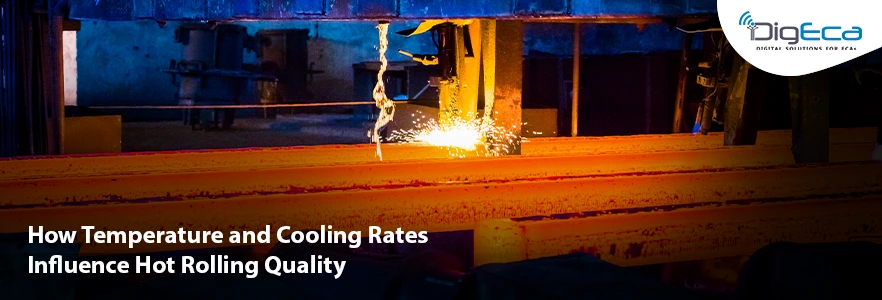
How Temperature and Cooling Rates Influence Hot Rolling Quality
The hot rolling process is a crucial stage in steel production, as it transforms metal slabs into a wide range of products used across various industries. The final product is based on numerous factors, including the temperature at which the material is processed and also the manner in which it is cooled. Understanding how temperature and cooling rates impact the hot rolled steel process is essential for ensuring steel rolling quality.
In this blog, we will explore how temperature control and the controlled cooling process influence the characteristics of hot rolled steel, and why this understanding is important for manufacturers seeking to produce high-quality steel products. With DigECA by Tata Steel, a cutting-edge digital platform, manufacturers can optimize the hot rolling process through real-time data and predictive analytics, further improving product quality and consistency.
The Hot Rolling Process: An Overview
Before delving into how temperature and cooling influence the quality of hot-rolled steel, it’s important to understand the basics of the hot rolling process step by step. During hot rolling, steel slabs or billets are heated to a high temperature, mostly higher than the recrystallization temperature of the steel, and then are passed through rollers that help in thinning the steel and shaping it. Through this, different steel products can be produced, which are sheets, plates, and structural sections.
The hot-rolled steel process involves several critical stages:
Heating: Steel slabs or billets are heated in a furnace at temperatures of about 1,100 °C to 1,300 °C, and this softens the steel, rendering it malleable.
Rolling: The steel, after being heated, is then rolled through a succession of rollers to make it thin and into any shape that is required. The rolling can be done using more than one pass to attain the final dimensions.
Cooling: Once the steel was shaped, it was cooled. The speed of cooling and the mode of cooling are vital factors in the attainment of the ultimate steel properties.
All these procedures are very important in the process of forming the end result of a steel product, though the rates of temperature and cooling of steel during the rolling and cooling process are very influential.
Temperature and Its Effect on the Quality of Hot Rolling
The hot rolling process relies heavily on precise temperature control. Steel can also be worked in a specific range of temperature, and anything outside this range may result in flaws in the end product. In case of low temperature, the steel will not deform well, resulting in uneven thickness or cracks. With excessive temperature, the material will be over-softened at the expense of its strength and integrity.
Material flow Influence: The rolling process has temperature as a determining factor of the flow characteristics of the steel. An increase in temperature reduces the viscosity of the steel, thus making shaping and forming it easier. Nevertheless, it is essential to ensure a range of optimal temperatures in order to prevent flaws like roughness of the surface or uneven thickness.
Grain Structure: The temperature regulation is also an important factor in the development of the grain structure of the steel. The size and the orientation of the grains impact the toughness, ductility, and strength of the material. Mismanagement of temperature may lead to the formation of a coarse-grained structure that makes the steel weak, and this affects its mechanical properties adversely.
Surface Quality: Surface finish of the steel is also a concern, depending on the temperature at which the rolling process was carried out. If the temperature is not adequately controlled, defects such as scale formation, oxidation, or pitting can appear on the surface of the steel, leading to poor steel rolling quality.
Cooling Rates and Implications on Properties of Steel
After the steel has been shaped through the hot rolling process, the cooling phase becomes equally important. The controlled cooling process helps to solidify the material, and how it is cooled directly affects the final mechanical properties of the steel.
Cooling Rate: The rate at which the steel is cooled after discharge of the rollers has a great effect on the microstructure of the steel. A rapid rate of cooling may cause brittle structures to form, whereas a slow rate causes undesirable phases or disproportional hardness.
Controlled Cooling Process: Many modern rolling mills use controlled cooling techniques to ensure that the steel cools at a rate that produces the best possible properties. Controlled cooling entails controlling the temperature at which the steel is cooled, usually through water sprays or jets of air. The manufacturers are able to control the cooling rate, hence controlling the hardness, strength, and ductility of the steel.
Effects on Mechanical Properties: The rapid cooling process can also lead to a more complex and more brittle steel, and the slower the cooling, the softer the material can be; this can produce a softer material with better ductile properties. This is aimed at reaching a compromise that gives the desired properties, which are based on the desired application of the steel.
Cooling Zones: There are also mills where the cooling operation is carried out in separate zones with varying rates of cooling the steel. It makes it possible to exercise strict control over the end properties. As an example, steel that needs to be highly strong can be cooled fast, whereas steel that is to be utilized in structures could be cooled at a slow rate to enhance ductility.
The Effect of Temperatures and Cooling on the Consistency of the Products
Another critical parameter that is influenced by temperature and cooling rates is the consistency of the end product. Changes in either may cause changes in thickness, surface finish, or mechanical property, and thus make it hard to conform to specifications. Manufacturers aim to maintain consistent temperature control throughout the rolling process and to use controlled cooling processes that deliver consistent results.
Conclusion
In the hot rolling process, the temperature at which steel is heated and the cooling rates applied during the rolling and solidification phases are crucial factors that determine the final quality of the steel. Manufacturers must carefully manage both to ensure optimal steel rolling quality.
By understanding how temperature and cooling rates influence the hot-rolled steel process, producers can better control the properties of their steel products. With DigECA by Tata Steel, manufacturers gain access to the latest tools in predictive analytics and real-time process optimization. This technology enhances the hot rolling process by providing valuable insights into temperature control, cooling rates, and product consistency, ultimately improving product quality and reducing defects.
Whether it’s optimizing the hot rolling process step by step or utilizing advanced controlled cooling processes, temperature and cooling management are fundamental to ensuring that the steel produced is strong, durable, and fit for its intended application.
1. Why is temperature control important in the hot rolling process?
Temperature affects steel’s malleability, surface quality, and grain structure. Proper control ensures uniform thickness, strong mechanical properties, and defect-free surfaces.
2. How does the cooling rate impact hot-rolled steel quality?
Cooling rate influences microstructure, hardness, ductility, and strength. Rapid cooling can make steel brittle, while slow cooling may result in softer, more ductile material. Controlled cooling achieves the desired balance.
3. What is controlled cooling in hot rolling?
Controlled cooling uses techniques like water sprays or air jets to regulate the steel’s temperature as it cools. This ensures consistent mechanical properties and minimizes defects.
4. How do temperature and cooling affect product consistency?
Fluctuations in temperature or cooling rates can cause uneven thickness, surface defects, or inconsistent mechanical properties. Stable control ensures uniform, high-quality steel output.
5. How does DigECA by Tata Steel help optimize hot rolling?
DigECA provides digital tools, real-time monitoring, and predictive analytics to optimize temperature control and cooling rates, improving steel quality, reducing defects, and ensuring consistent production.