
How to distinguish between Powder Coating and Liquid Coating?
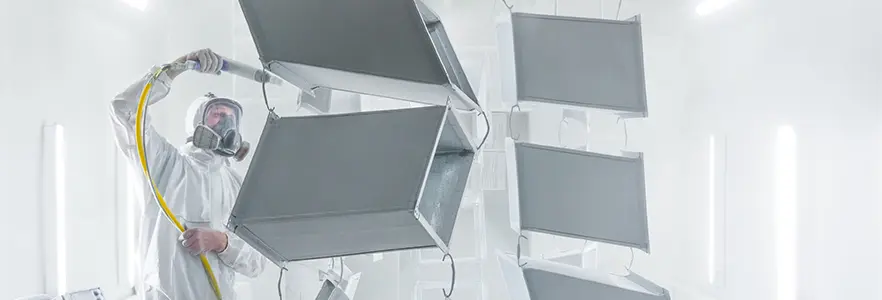
How to distinguish between Powder Coating and Liquid Coating?
Coating plays a crucial role in enhancing the durability, appearance, and performance of various products and surfaces. It serves as a protective layer that shields against corrosion, wear and tear, and environmental factors. When it comes to coating applications, two commonly used methods are powder coating and liquid coating. This blog aims to provide a comprehensive understanding of these coating techniques, highlighting their differences, benefits, and preferred industry choice. In addition, we will explore how Tata Steel, a leading player in the industry, leverages these coating methods to deliver high-quality and sustainable solutions.
Why is coating done?
The coating serves multiple purposes, primarily aimed at improving the durability, aesthetics, and functional properties of the substrate. It acts as a protective layer that safeguards against corrosion, chemical exposure, UV radiation, and abrasion. Coatings also enhance the appearance of the surface, providing color, texture, and gloss. Furthermore, specific coatings can offer additional functionalities such as anti-bacterial properties, non-stick surfaces, and heat resistance. Whether it's automotive parts, appliances, architectural structures, or industrial equipment, the coating is essential to ensure longevity and performance.
Powder Coating
Powder coating is a dry coating method where a fine powder is electrostatically charged and sprayed onto a surface. The charged particles adhere to the surface and are then heated to melt and fuse into a durable, uniform coating. This process provides excellent adhesion, corrosion resistance, and UV protection. Powder coating offers advantages such as a thicker and more consistent coating, a wide range of finishes and colors, environmental friendliness with low VOC emissions, easy maintenance, and durability against chipping and scratching. It is widely used in industries like automotive, architecture, and furniture for both functional and decorative purposes, enhancing the appearance and longevity of various products.
Advantages of Powder Coating:
- Durability: Powder coatings are highly resistant to chipping, cracking, and peeling, providing a long-lasting protective layer.
- Environmental Friendly: Powder coatings are solvent-free, reducing volatile organic compounds (VOC) emissions and minimizing environmental impact.
- Wide Color Range: Powder coatings offer a vast array of color options, finishes, and textures, allowing for customization and design versatility.
- Efficiency: Overspray from powder coating can be collected and reused, minimizing material waste and optimizing cost-effectiveness.
- Uniform Coating Thickness: Powder coatings provide consistent thickness across the substrate, ensuring even coverage and enhanced corrosion protection.
Liquid Coating
Liquid coating refers to the application of coatings in liquid form, such as paint, varnish, enamel, or lacquer, onto a surface. It involves methods like spraying, dipping, or brushing, where the liquid is spread evenly to form a thin layer. The coating undergoes a curing process, either through solvent evaporation or chemical reaction, to harden and create a protective film. Liquid coatings offer a range of finishes, colors, and textures, making them suitable for decorative and protective purposes on materials like metal, wood, plastic, and concrete. However, liquid coatings may have higher volatile organic compound (VOC) emissions, require more maintenance, and be less durable compared to powder coatings. Nonetheless, they provide versatility and a wide array of options for coating applications in industries such as automotive, construction, furniture, and electronics.
Advantages of Liquid Coating:
- Smooth Finish: Liquid coatings offer a smooth and glossy finish, providing an aesthetically pleasing appearance.
- Flexibility: Liquid coatings can easily conform to complex shapes and contours, making them suitable for intricate or curved surfaces.
- Thin Film Application: Liquid coatings can achieve thinner film thicknesses, making them ideal for applications where a thin coating is desired.
- Reparability: Liquid coatings can be easily repaired or recoated, allowing for maintenance and touch-ups as needed.
- Customizable Formulations: Liquid coatings can be formulated with various additives to meet specific requirements, such as UV resistance, chemical resistance, or fire retardancy.
Powder and Liquid coatings: What's the difference?
While both powder coating and liquid coating offer unique advantages, there are notable differences that set them apart.
Aspect | Powder Coating | Liquid Coating |
Application | Applied as a dry powder onto the surface | Applied as a liquid onto the surface |
Method | Electrostatic spray or fluidized bed application | Spray, dip, or brush application |
Adhesion | Excellent adhesion to the substrate | Adhesion can vary depending on the coating and substrate |
Curing | Requires heat for melting and curing | Cures through evaporation or chemical reaction |
Thickness | Thick and consistent coating | Thin to moderate coating thickness |
Environmental | Environmentally friendly with low VOC emissions | Higher VOC emissions and potential environmental impact |
Finish Options | Wide range of finishes, textures, and colors | Limited range of finishes, textures, and colors |
Durability | Highly durable and resistant to chipping and scratching | Less durable and more prone to chipping and scratching |
Efficiency | High transfer efficiency and minimal waste | May have overspray and higher material waste |
Maintenance | Easy to clean and maintain | May require more maintenance and touch-ups |
Cost | Higher upfront cost for equipment and materials | Lower upfront cost for equipment and materials |
Is there a preferred industry choice?
To be specific, the choice between powder coating and liquid coating depends on various factors, including the substrate, desired finish, application process, and environmental considerations.
Powder coating is often favored in the steel industry due to its excellent durability, corrosion resistance, and ability to provide a thick and consistent coating. It offers superior protection against harsh environments, chemical exposure, and mechanical stress. Powder coating also provides a wide range of color options and finishes, allowing for customization and aesthetic appeal. Additionally, it is an environmentally friendly option with low VOC emissions.
Liquid coating, on the other hand, may be preferred in certain steel industry applications where specific requirements are better met. Liquid coatings can offer more flexibility in terms of application methods, allowing for easier touch-ups, repairs, or coating irregular shapes. They may also provide a smoother and more even finish, particularly for intricate or complex steel structures.
Ultimately, the choice between powder coating and liquid coating in the steel industry will depend on factors such as the specific steel product, desired performance characteristics, aesthetic requirements, coating thickness, application process efficiency, and environmental considerations. It is recommended to consult with coating experts or professionals within the steel industry to determine the most suitable coating option for a particular application.
Tata Steel's Approach
Tata Steel, a leading player in the steel industry, leverages both powder coating and liquid coating techniques to deliver high-quality and sustainable solutions. With a focus on customer needs, Tata Steel offers a wide range of coated steel products for various applications.
Products like ColorNova, Galvanova, GalvaRoS are some coated steels that are 100% RoHS compliant, totally authentic, weather resistant and have wide uses ranging from door and window frames to false ceilings and home appliances. The company's state-of-the-art coating facilities ensure superior adhesion, corrosion resistance, and aesthetic appeal. Tata Steel also emphasizes environmental responsibility by optimizing coating processes to minimize waste generation and energy consumption. By leveraging the strengths of both powder coating and liquid coating, Tata Steel provides innovative solutions that meet industry demands while ensuring sustainable manufacturing practices.
Conclusion
Understanding the differences between powder coating and liquid coating is essential for selecting the appropriate coating method based on specific requirements. While powder coating offers durability, environmental advantages, and a wide range of color options, liquid coating excels in achieving smooth finishes and conforming to complex shapes. The preferred industry choice depends on factors such as substrate type, desired appearance, and functional properties. Tata Steel's expertise in utilizing both coating techniques allows them to provide tailored solutions to meet diverse customer needs while maintaining a commitment to sustainability and quality.
1. What is the main difference between powder coating and liquid coating?
Powder coating is applied as a dry powder and cured with heat, offering thick, durable layers, while liquid coating is applied as a liquid and cured by evaporation or chemical reaction, resulting in thinner layers.
2. Which coating method is more durable for steel products?
Powder coating provides superior durability, corrosion resistance, and scratch resistance, making it ideal for steel exposed to harsh environments.
3. When is liquid coating preferred over powder coating?
Liquid coating is better for intricate shapes, thin layers, or applications that require easy touch-ups and smooth glossy finishes.
4. How does Tata Steel implement powder and liquid coatings?
Tata Steel uses products like ColorNova, Galvanova, and GalvaRoS, offering both powder-coated and liquid-coated steel with excellent adhesion, corrosion resistance, and aesthetics.
5. Which coating method is environmentally friendly?
Powder coating is more eco-friendly with low VOC emissions, while liquid coatings may have higher VOCs and require more maintenance, impacting environmental sustainability.