
Long-Term Advantages of Galvalume Steel Coils in Infrastructure Projects
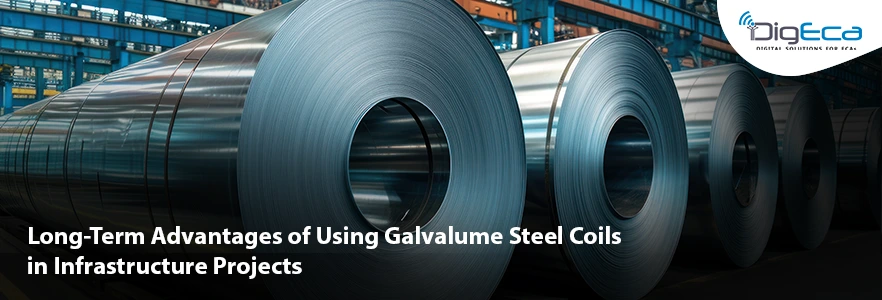
Long-Term Advantages of Using Galvalume Steel Coils in Infrastructure Projects
Infrastructure is not just about concrete, steel, and design; it is a pillar of progress. All the highways uniting cities, all the logistics centers driving the business, all the large industrial complexes start with a single issue that needs to be fixed, and this is the selection of the right materials. More innovative, long-lasting, and reliable solutions have become commonplace in the construction industry in recent years. Among them, the galvalume steel coil has emerged as a standout performer.
It is not just a coincidence that it is durable; it is designed with it in mind. However, there is more to technical strength than just long-term peace of mind, which is what Galvalume steel will provide. And that is a priceless asset in infrastructure.
A Material for the Future of Infrastructure
What is genius about Galvalume steel is its coating, the well-calculated blend of 55 percent aluminum, 43.5 percent zinc, and 1.5 percent silicon. This triple protection allows it to have the advantages of aluminum on the barrier resistance and the sacrificial protection of zinc. Simply, it defends itself-and the building in which it is embedded.
Such a special combination of alloys puts Galvalume steel infrastructure in a category where durability, stability, and affordability are synonymous.
1. Corrosion Protection, Tested and Proven.
Think of a substance that does not rust a bit in its lifetime, in spite of heat, humidity, or pollution. That is one of the most remarkable Galvalume steel benefits. Its ability to withstand corrosion is much higher than that of conventional galvanized finishes, and thus it is more preferred in those environments that test the structural integrity.
In comparisons of Galvalume vs galvanized steel, Galvalume consistently outperforms by lasting up to three to four times longer in many conditions. Projects in the coastal areas, the industrial belts, and high-moisture regions, where generally steel structures do not perform well, have an added advantage in this increased protection.
To infrastructure developers, it means decades of trouble-free operation that comes with a great deal of maintenance headaches.
2. Lifecycle Cost Saving without Compromising Quality.
Cost-effectiveness does not only imply the initial cost. The real issue with infrastructure is the behavior of a material during the course of its existence. One example of high-value longevity in textbooks is galvalume steel.
Its long life span also decreases the rate of repair, the cost of replacement, and downtime. The investment initial might be higher than in traditional options, but the savings are hard to resist in the long run.
- This is the reason why Galvalume steel is coming out as a strategic choice towards:
- Large industrial parks
- Public infrastructure
- Covering and roofs in business premises.
- Warehousing and logistics centres.
A year of saved maintenance is a year of increased efficiency--and Galvalume bestows that benefit very freely.
3. Natural Heat Reflectivity to save energy.
The infrastructure in the world today is supposed to do more than just stand tall; it should be smart. Galvalume steel enters this job without an issue because it is a natural reflector of heat.
Whether used in roofing or exterior panels, especially metal roofing sheets, it helps regulate indoor temperatures by deflecting solar heat. The outcomes of this are cooler buildings and less air-conditioning loads, and quantifiable signs of energy consumption.
In other cases, such as warehouses, industrial plants, and retail areas with high daily volumes of activities, this performance is translated into reduced energy bills and a more comfortable environment.
4. Imaginative Liberty and Functional Manageability.
The contemporary infrastructure combines both functionality and beauty. Both are supported by galvalume steel. Its portability and strength enable architects and engineers to be creative in the designs without compromising on the structural integrity.
It is flexible in forming, bending, coating, and installation, thus suitable for various uses, including:
- Roofing systems
- Wall panel and facade cladding.
- Solar mounting structures
- Farm structures
- Transport terminals
- Civil infrastructure
Its strength-to-weight ratio gives it less weight to carry to the building, which makes it safer and more efficient, and does not affect its design opportunities.
5. A Good, Appealing Finish Today--and Years Ago.
Construction materials do not necessarily get along well with time. Glosses or scotches on buildings can affect the aesthetic appearance of buildings. However, galvalume steel, years later, still retains its smooth matte finish.
This is a lasting design that has been of particular appeal to modern architectural designs, where beauty is as much as it is sustainable. The material is not prone to discoloration, stains, and weathering, thus the structural appearance remains smooth even many years after construction.
In the case of the public buildings, commercial complexes, and futuristic areas, visual consistency is a priority, and Galvalume steel does not fail to deliver that guarantee.
6. A Step Towards Sustainable Infrastructure Vision of India.
Green building technologies are not the stuff of choice, but a necessity. As more attention is paid to creating a smaller carbon footprint and more efficient use of materials, Galvalume steel integrates into the concept of green building
It offers:
- Increased life expectancy (victimization minimization)
- 100% recyclability
- Reflectivity as a way of energy saving.
- Less harmful to the environment during its lifecycle.
The longer the materials last and the better they are, the better it is for the earth and the project budgets. Galvalume steel is in tandem with long-term sustainability objectives in the infrastructural sector, both in the public and private sectors.
7. Trustworthiness That Enhances Scale Development.
Critical infrastructure should be reliable. Such facilities as airports, ports, processing plants, and power projects cannot accommodate frequent structural problems. Galvalume steel is a type of steel that ensures some degree of reliability, which reinforces such essential developments.
Peeling, cracking, or surface degradation cannot occur with it, which is a guarantee of consistent performance in harsh conditions. Galvalume steel remains stable even in rainy conditions, industrial pollution, or changing temperature conditions.
This predictability has seen it become a reliable option when it comes to mission-critical buildings that are meant to be used by communities for decades.
Conclusion
The long-term advantages of galvalume steel coil extend far beyond durability. It incorporates science, performance, and practicality to develop a material that is required in the changing infrastructure. Galvalume steel is a material of tomorrow with its corrosion protection, energy-saving qualities, structural elasticity, aesthetics, and sustainability.
Due to the ever-growing infrastructure presence in India, selecting a material that will last is not only an expectation but also an obligation. Galvalume steel will take on that responsibility without any doubts, which is why it is a material that engineers, architects, and developers will prefer when it comes to high value and high-performance in the long-term perspective.
FAQ:
1. What is Galvalume steel and why is it used in infrastructure?
Galvalume steel is coated with a blend of 55% aluminum, 43.5% zinc, and 1.5% silicon, providing superior corrosion resistance, durability, and heat reflectivity. It is ideal for infrastructure projects like industrial parks, warehouses, roofs, and public facilities.
2. How does Galvalume steel reduce lifecycle costs?
Its long lifespan minimizes repair, replacement, and maintenance costs. Though the initial investment may be higher than conventional steel, it saves money over decades by reducing downtime and maintenance needs.
3. How does Galvalume steel contribute to energy efficiency?
Galvalume naturally reflects solar heat, reducing indoor temperatures and lowering air-conditioning and energy costs. This makes it suitable for roofing, exterior panels, and large-scale industrial facilities.
4. What design flexibility does Galvalume steel offer?
It is lightweight yet strong, easy to form, bend, coat, and install, allowing architects and engineers to create functional and visually appealing structures, including roofs, facades, solar mounts, and transport terminals.
5. Is Galvalume steel sustainable?
Yes. It is 100% recyclable, reduces material wastage, has a long service life, and supports energy-efficient designs, making it a material aligned with green building and sustainable infrastructure goals.