
PEB Steel Frame Design Considerations for Earthquake Zones
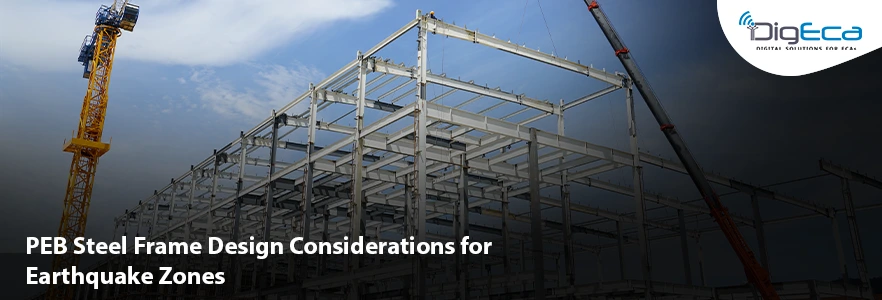
PEB Steel Frame Design Considerations for Earthquake Zones
The construction of steel buildings in areas where seismic activities are likely to occur is highly significant in the protection of buildings and their durability. Pre-engineered metal buildings (PEMBs) are becoming particularly popular in India because they are fast, economical and versatile. Nevertheless, to build PEB steel frames in earthquake-prone areas, one has to pay a lot of attention to the design principles, the choice of material, and adherence to seismic standards. Tata Steel offers comprehensive solutions through the DigECA to direct the architects, engineers, and builders on the development of earthquake-resistant steel buildings that are safe, perform, and sustainable with regard to meeting the objectives of safety, performance, and sustainability.
The Knowledge of Pre-Engineered Metal Buildings in Seismic Zones
PEBs are designed with efficiency and flexibility and, therefore, are suitable in large-span buildings such as warehouses, factories, and commercial complexes. In building in a seismic area, one has to make the structure more resistant to the forces that appear laterally during an earthquake.
The use of PEB steel frame seismic zones requires not only careful planning but also precise engineering to ensure that buildings remain safe and functional even during strong seismic events. PEBs combine contemporary design approaches to utilise better functioning in the territory of natural disasters and decrease the time and expenses of construction.
Essential Design Principles of steel buildings that are resistant to earthquakes
The development of a steel building that is resistant to earthquakes is a strategic approach and engineering process that necessitates that seismic forces are well handled. It is important to know how the structure will move in case of lateral movements in order to increase safety.
Load Path Continuity: The seismic forces should be able to pass through the roof to the foundation. All joints and connectivity must be structured so as to support sideways troops and, at the same time, remain stable.
Redundancy in Structural Members: The inclusion of several load paths ensures that, in case one element fails, other components are available to share the load. This redundancy is essential in PEB steel frame seismic zones.
Flexibility and Ductility: Steel frames are ductile in nature, which means they deform under stress without breaking down disastrously. Correctly constructed connections and bracing are helpful in the safe dissipation of seismic energy.
These values assist in making sure that the pre-engineered metal buildings are safe and stable even in extreme seismic conditions.
Seismic Performance Material Concerns
The correct materials are central to the development of PEB steel frames that are earthquake-resistant. The strength and ductility of steel render it suitable for earthquake-resistant steel constructions, yet the seismic performance is to be considered further.
Members made of high-strength steel are used in the most important elements of the load, and lightweight panels help to simplify the total weight of the building, reducing the seismic impact on it. The integrity of the steel throughout the lifespan of the structure is also ensured through the use of corrosion protection and exceptional attention to the material used.
By selecting materials with these properties, PEB structure manufacturers can enhance both the safety and durability of steel buildings in seismic zones.
PEB Steel Frames Structural Design
PEB steel frame design in seismic-prone areas entails several factors, and they include frame composition, bracing, foundation and connection detailing.
Frame Construction: Moment-resisting Frames, braced Frames and rigid Connections aid in offering lateral stability. The decision is determined by occupancy, height of the building and span.
Roof and Wall Bracing: Cross-bracing, portal frame, and knee brace assist in the distribution of the seismic forces evenly in such a way that there is no possibility of a localised failure.
Design of Foundations: Well-designed foundations of buildings can be used to withstand the lateral movement and stabilise the structure.
Connection Detailing: Connection: Bolted and welded connections should permit deformation to be controlled and dissipate energy in case of an earthquake.
DigECA Tata Steel is an advanced digital tool that is designed to make optimised PEB steel frame designs to optimise seismic performance and assist the business in developing a structure that is in compliance with safety standards.
Observation of Seismic Codes
When building earthquake-resistant steel buildings, there is a need to adhere to the seismic codes of India, as required in the seismic code of India, i.e. the IS 1893 (Part 1). Such codes are used to determine zoning, load calculations, and materials, to make sure that structures can hold seismic forces.
For a PEB structure manufacturer, adherence to seismic codes is a mark of quality and reliability. Tata Steel, through DigEC, ensures that all PEB designs are in compliance, meaning that the business is certain that the structure is safe as well as code-certified.
Advantages of PEB Steel Frames in Zones of Earthquakes
Several benefits other than what structural safety offers are associated with the pre-engineered metal buildings used in seismic areas. PEBs are suitable in areas prone to earthquakes by allowing them to be flexible in design, efficient in materials, and easy to set up.
These advantages are lower building time, cost-efficiency due to optimisation of the materials, increased safety because of the ductile steel frame, and the ability to make changes or expansions in the future. Companies that invest in PEB steel frame seismic zones gain both performance and resilience in their structures.
Role of DigECA by Tata Steel
Tata Steel Company is leading with DigECA, as it provides the direction on the use of PEB in earthquake-resistant structures. Through the use of modern engineering equipment, quality steel and seismic designing skills, DigECA by Tata Steel is convinced that steel frames are very strong, secure and meet code requirements.
Through DigECA, businesses can access a network of trusted PEB structure manufacturers, select optimal steel grades, and design earthquake-resistant steel buildings tailored to their specific needs. This comprehensive strategy enables businesses to make wise decisions in investing in pre-engineered metal buildings.
Conclusion
The PEB steel frame designed in regions prone to earthquakes should be developed with close attention to the structural integrity, material strength and compliance with the regulations. Pre-engineered metal buildings provide a secure and effective way for industrial, commercial and institutional buildings. The business can make its structures safe and sustainable by implementing earthquake-resistant design principles and capitalising on the experience of the DigECA developed by Tata Steel.
PEB steel frames, with the help of DigECA, enable companies to comply with the standards of safety, minimise earthquake risks, and protect their constructions in the future. Earthquake-resistant steel buildings can become a reality in India; Tata Steel’s DigECA offers the know-how and resources to implement the concept of resilience and sustainability in building design.