
Steel Used in Railway Tracks: Types, Benefits and Safety Role
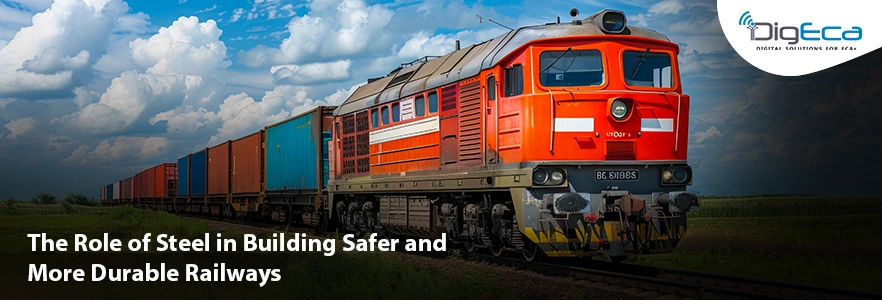
The Role of Steel in Building Safer and More Durable Railways
When you think of railway tracks, the first thing that comes to mind is probably steel. It’s everywhere in rail infrastructure, from the tracks to the fasteners holding them down. But have you ever stopped to ask: why is steel used to make railway lines in the first place?
Let’s break it down. Steel isn’t just a convenient choice. It’s an essential material that directly affects the safety, durability, and performance of rail systems. And as the demands on railway networks increase with heavier loads, higher speeds, and extreme climate conditions, railroad steel is evolving, too.
This post explores how steel plays a central role in railway engineering, what makes it so reliable, and what innovations are shaping its future.
Why Steel?
So, why is steel used to make railway lines, instead of, say, iron or other metals?
Here’s the thing: railway tracks are exposed to brutal conditions, constant friction, vibration, weather changes, and extreme mechanical loads. They need to be tough, flexible, wear-resistant, and long-lasting. Steel checks all those boxes.
It’s the only material that can handle:
- Massive loads from freight and passenger trains
- High-speed dynamic impact
- Long spans without warping
- Extreme temperature variation
Other materials like aluminum or iron simply don’t offer the strength-to-weight ratio or fatigue resistance that steel used in railway tracks can.
The Evolution of Railroad Steel
Railways have been around for over two centuries, and the journey of railroad steel has been one of constant improvement.
In the early days, cast iron rails were the norm. They were brittle and cracked easily. Then came wrought iron—stronger, but still prone to wear. The real breakthrough happened in the 1850s when steel manufacturing (specifically the Bessemer process) became scalable. Suddenly, steel rails were not just stronger—they were cheaper to make.
Today, railroad track steel is a far cry from the steel of a century ago. Modern steel rails are engineered to handle tens of thousands of tons of pressure daily. They’re heat-treated, wear-resistant, and formulated with specific alloy compositions to extend lifespan and performance.
What Type of Steel is Used in Railway Tracks?
The type of steel used in railway tracks isn't your run-of-the-mill construction steel. It’s specially developed for hardness, fatigue resistance, and weldability.
Here’s a quick breakdown of what goes into it:
- Carbon content: Typically around 0.6–0.8%, which increases strength without making the steel too brittle.
- Manganese: Often added to improve hardness and wear resistance.
- Silicon, Chromium, Vanadium: Trace elements that enhance tensile strength, toughness, and corrosion resistance.
The most common grade globally is UIC 860, used widely across Europe and Asia. In India, Indian Railways often uses IRS-T 12 rails and increasingly advanced variants for heavy-haul freight corridors.
One modern example is Head-Hardened (HH) steel rails. These are treated to create a super-hard surface layer while maintaining a ductile core, ideal for metro systems and high-speed rail corridors.
Safety Begins with the Track
Railway safety doesn’t begin with advanced signaling or driver training, it starts at the ground level, with the track itself. And railroad steel is the first line of defense.
Poor quality or poorly maintained railroad track steel can lead to:
- Rail fractures and derailments
- Increased wear and tear on rolling stock
- Maintenance downtime and service disruption
That’s why high-performance steel is critical. It resists cracking, handles extreme stress cycles, and ensures the rail retains its shape even after years of service.
Moreover, modern track steel is designed for predictability. Engineers can forecast how the steel will behave under stress, when it will need replacement, and how it will deform over time. This predictability feeds into better planning, fewer surprises, and safer rail systems overall.
Steel and Durability: Long Life, Lower Costs
Here’s another reason steel used in railway tracks is such a smart choice: cost-effectiveness.
Yes, high-quality railroad steel is expensive to produce. But when you consider its lifespan, the ROI becomes obvious. A typical steel rail can last 20–30 years with proper maintenance, especially on freight corridors.
Some factors that boost longevity include:
- Hardened surfaces to resist abrasion
- Advanced welding techniques to reduce weak points
- Smart fastening systems that reduce vibration and stress
It’s also more recyclable than most materials. When a rail reaches the end of its life, it doesn’t go to waste. It gets melted down and reborn as another rail, or maybe even part of a skyscraper.
Digital Monitoring: How Data Keeps Steel Safer
At Tata Steel DigECA, we understand that having good railroad track steel isn’t enough. The system needs to be monitored, analyzed, and optimized continuously.
That’s where digital tools come in. We’re using AI and advanced analytics to track rail performance in real time. Things like:
- Temperature-induced stress
- Micro-crack development
- Wear patterns from axle loads
- Environmental impact on corrosion
This allows operators to make informed decisions: when to schedule maintenance, where to reinforce sections, or how to reroute loads. Predictive maintenance isn’t just about saving costs—it’s about saving lives.
By combining the strength of steel with the power of data, India’s rail systems can get smarter, safer, and more resilient than ever.
What’s Next for Railroad Steel?
The future of railroad steel is not static. It’s being shaped by innovation on multiple fronts:
- High-speed rail: Needs ultra-stable, head-hardened rails with minimal deformation.
- Green steel: Low-emission steel production methods to reduce the carbon footprint of infrastructure.
- Smart rails: Integration of IoT sensors directly into the steel to detect anomalies in real time.
- Advanced welding methods: Laser welding and flash-butt welding to minimize joint fatigue.
At Tata, our research into steel manufacturing, thermomechanical processing, and AI-based inspection continues to push the envelope.
Conclusion
Prioritize Smarter Steel, Not Just Stronger Tracks
If you’ve ever asked why steel is used to make railway lines, the answer is simple: nothing else performs better across the board. From handling 30,000-ton freight loads to withstanding temperature swings across India’s vast landscape, railroad steel is the foundation of safe and sustainable rail transport. But it’s not just about the material, it’s about how you monitor it, how you predict its wear, and how you act on the data.
That’s where platforms like Tata Steel DigECA step in. Because building safer, more durable railways isn’t just about laying stronger tracks. It’s about laying smarter ones.