
Building Sustainable Railways with Green Steel and Eco-Friendly Materials
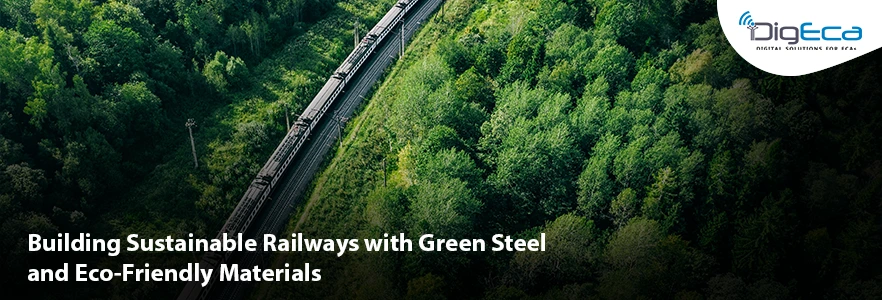
When it comes to transportation modes, railways are considered to be the most sustainable choice. In contrast to aeroplanes and cars, it emits less carbon per passenger.
However, the railway infrastructure development and maintenance are massively resource-intensive, with steel, energy, and concrete contributing to significant emissions. Steelmaking alone is responsible for approximately 7 to 9% of global carbon emissions. When cement production is added, the total increases by another 8%.
This is where green steel and eco-friendly construction materials can make a significant difference towards the environmental impact of rail transport. With the utilisation of green steel and eco-friendly construction materials, the sustainability goes beyond the operation to the very foundation of the system.
Sustainability in Railway Construction: Why it Matters?
Sustainable railways construction matters since it decreases the significant environmental impact of the sector. Beyond that, it improves the ecosystem health. Moreover, it reduces the life-cycle costs.
The worldwide push towards net-zero emissions is changing how infrastructure projects throughout different sectors are planned and developed. Railways as a transportation mode are eco-efficient than the alternatives. But the infrastructure development relies massively on steel and concrete.
Now, traditional steelmaking contributes 7 to 9% global emissions. Therefore, if no greener alternatives are found, railway expansion will become another reason for the climate crisis.
By using green steel and eco-friendly materials for railway construction, the development and expansion projects can drastically reduce carbon emission rates.
Projects that are sustainably constructed and maintained not only decrease the carbon footprint but also welcome long-term savings and efficiency.
Green Steel: The Greener Choice
Steel is the most essential element of every railway system, be it the tracks, stations, bridges, or rolling stock. The coal-fired blast furnaces are generally used for the production of steel, which makes it one of the most carbon-intensive materials. A long-term solution for this comes in the form of green steel, which can reduce up to 95% emissions compared to traditional steel.
The Hydrogen-based direct reduction reduces coal with hydrogen, massively reducing emissions. On the other hand, the EAFs utilise renewable electricity in order to get new products by recycling the scrap steel.
For railways:
- Green steel is a superior choice to traditional steel since it reduces carbon emissions by almost 90%.
- Green steel production massively depends on recycled steel scrap. Therefore, it reduces the need for new mining given at the end of the railway’s life, green steel can be melted and re-forged for new rails or other applications.
- In addition to being eco-friendly, green steel also maintains the same strength and reliability as traditional steel.
There are multiple green steel benefits for railway construction. Since steel is one of the most essential materials in railway construction, having an eco-friendly choice in the form of green steel makes railway expansion a sustainable choice.
Eco-friendly Materials in Railway Construction
While the utilisation of green steel is crucial towards making railway construction and expansion sustainable, there are other eco-friendly materials that add to the sustainability profile of railways.
There are recycled concrete and aggregates that reduce cement-related emissions when they are used in foundations, sleepers, and platforms, such as fly ash and slag.
A change in the paints can also add to the sustainable railway construction. The paints that we have used for so many years release VOCs (volatile organic compounds). These are harmful not only to the environment but to the workers as well. When you consider the eco-friendly coatings, you are protecting infrastructure and the environment. Moreover, you also minimises the health risks of the workers.
Recycled plastic and composite sleepers can also make massive contributions towards overall sustainable railway construction. These are made from plastic waste and other composite materials, offering a dual benefit of diverting waste while also offering a durable product. In addition to that, the recycled plastic and composite materials come with superior resistance and a longer lifespan.
Conclusion
Through its operations, Railway already provides a 75% approximate reduction in carbon emissions per passenger-kilometre in comparison to other modes of transportation. When you opt for green steel and eco-friendly materials, the sustainability goes beyond operations to the very foundation of the system.
As the commitment towards sustainable railway construction is on the horizon to be a necessity instead of a choice, digital platforms like DigECA by Tata Steel are there to ensure meeting the demands by providing access to sustainable and efficient solutions.